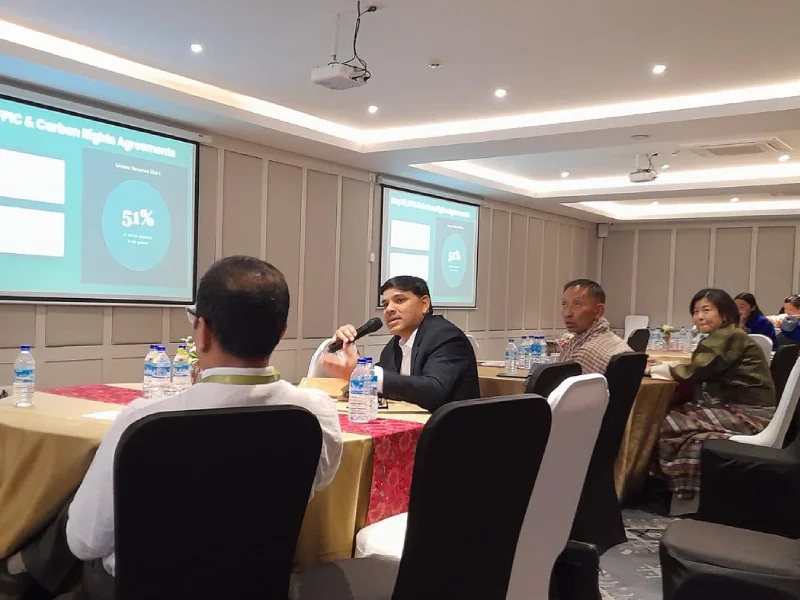
The Global Carbon Council (GCC) partnered with Terrama and the Department of Environment and Climate Change (Ministry of Energy and Natural Resources), the Royal Government of Bhutan to deliver a three-day capacity-building workshop in Bhutan titled “From Policy to Practice: Bhutan-Singapore Article 6 Capacity-Building for Carbon Projects.” The workshop aimed to equip policymakers, project developers, and private sector stakeholders with practical insights on designing credible carbon projects aligned with Article 6 of the Paris Agreement.
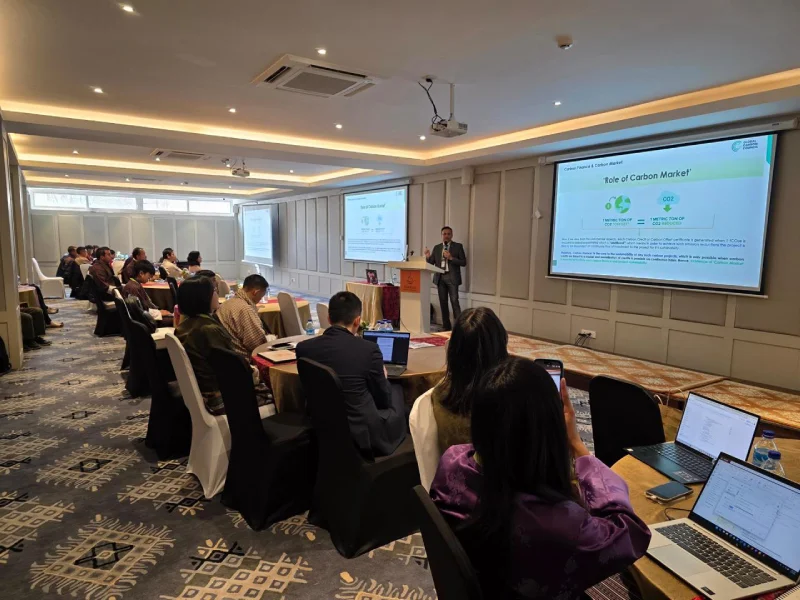
Held from 2–4 March 2026 in Thimphu, the workshop brought together more than 100 participants from government institutions, regulators, financial institutions, and private sector organizations in Bhutan. The program focused on bridging the gap between carbon market policy frameworks and real-world project development under Article 6 of the Paris Agreement, guiding participants through the institutional, technical, and financial aspects of developing credible carbon projects.
Through a combination of policy discussions, technical sessions, and practical exercises, the workshop helped participants better understand the requirements for designing and implementing bilateral carbon market projects between Bhutan and Singapore.
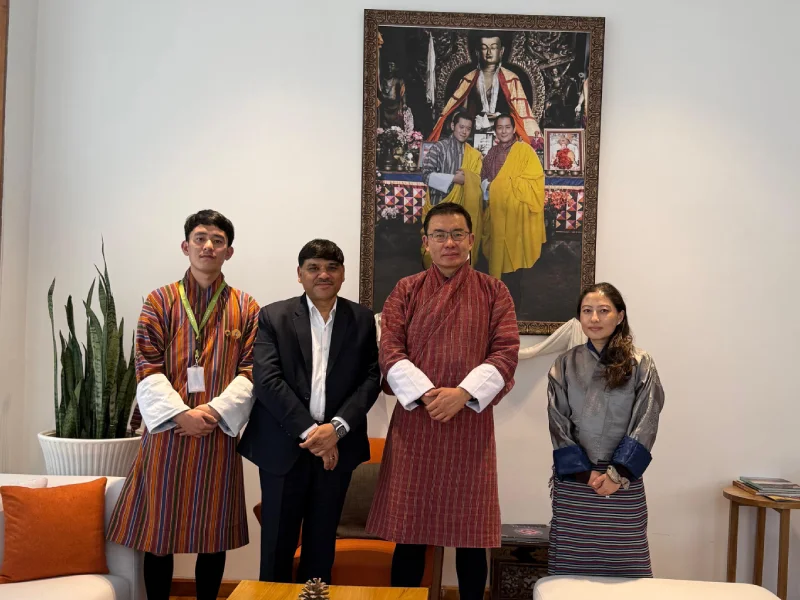
The Global Carbon Council contributed significantly to the workshop, sharing insights on carbon market integrity, standards, verification systems, and digital Carbon Market Infrastructure that underpin high-quality carbon credit generation.
Carbon Standards, Methodologies and Market Integrity
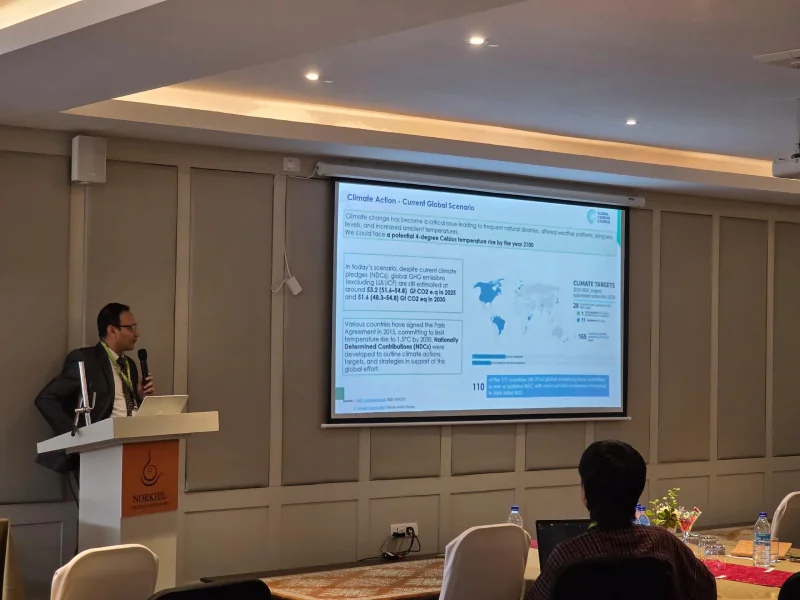
GCC delivered a keynote session on “Carbon Standards, Methodologies and Integrity,” providing participants with an overview of the evolving global carbon market landscape and the institutional frameworks required to ensure credibility and integrity in climate action.
The keynote covered:
- Global climate context and frameworks: The role of the Paris Agreement and Nationally Determined Contributions (NDCs) in guiding countries toward net-zero emissions, and how national and international climate commitments shape the design of credible carbon projects.
- Scaling up climate finance: The urgent need to mobilize and channel investment into low-carbon solutions to meet global climate targets, and how carbon markets can attract finance to projects that deliver real emission reductions.
- Carbon markets as a financing mechanism: How projects that reduce or remove emissions can generate carbon credits that provide a return on climate action, enabling governments and private actors to invest confidently in mitigation initiatives.
- Ensuring integrity through standards and methodologies: The importance of robust carbon standards, scientifically grounded methodologies, and transparent monitoring systems to guarantee that emission reductions are real, measurable, additional, and permanent systems to ensure that emission reductions are real, measurable, and additional.
Validation, Verification and the Role of VVBs
Another GCC-led technical session was on the role of Validation and Verification Bodies (VVBs) in the carbon credit lifecycle, focusing on how independent validation and verification ensures the credibility of emission reductions and builds trust among buyers and investors in international carbon markets.
The session covered the sequential processes involved in project validation and periodic verification, highlighting how rigorous assessments help confirm project additionality, baseline determination, monitoring systems, and emissions reductions.
It also featured practical insights on common challenges and risk areas in carbon project development, helping participants understand the importance of strong MRV frameworks and transparent verification processes when developing projects that aim to generate internationally transferable mitigation outcomes (ITMOs).
Experts from GCC also highlighted how high-integrity carbon markets rely on independent verification and transparent processes to ensure that emission reductions are credible and aligned with international carbon market standards.
Digital Infrastructure for Carbon Market Participation
Complementing these discussions, GCC representatives shed light on the GCC’s Carbon Market Infrastructure (CMI) and Interoperable National Registry Solution, which is being offered to countries for operationalization of Article 6.2 of the Paris Agreement.
They provided a demonstration of the CMI and National Registry, explaining how GCC supports countries through this infrastructure in finalizing cooperative approaches, developing national methodologies in collaboration with GCC, approving Activity Idea Notes (AINs) and projects, authorizing ITMOs, facilitating BTR reporting, and enabling payment collection for corresponding adjustments under Article 6.2 of the Paris Agreement.
GCC also explained how interoperable digital platforms can support governments in managing carbon market operations while ensuring alignment with international frameworks such as Article 6. These systems help facilitate the issuance, transfer, and tracking of mitigation outcomes while reducing risks related to double counting and improving market transparency.
By strengthening digital carbon market infrastructure, countries can enhance institutional readiness, enable cross-border carbon transactions, and mobilize climate finance for mitigation projects.
Strengthening Capacity for High-Integrity Carbon Projects
The workshop was designed not only as a knowledge-sharing platform but also as an interactive learning experience. Participants worked in groups to design conceptual Bhutan-hosted carbon projects intended for Singaporean acquisition under Article 6 mechanisms, culminating in final project pitches at the end of the program.
By combining policy discussions with practical exercises, the workshop helped participants better understand the technical, regulatory, and financial requirements needed to develop credible carbon projects.
The strong participation from stakeholders across Bhutan’s public and private sectors reflected the growing interest in leveraging high-integrity carbon markets to support climate action and sustainable development.
Through its engagement in initiatives like this workshop, the Global Carbon Council continues to support capacity building, knowledge exchange, and the development of credible carbon market frameworks worldwide.