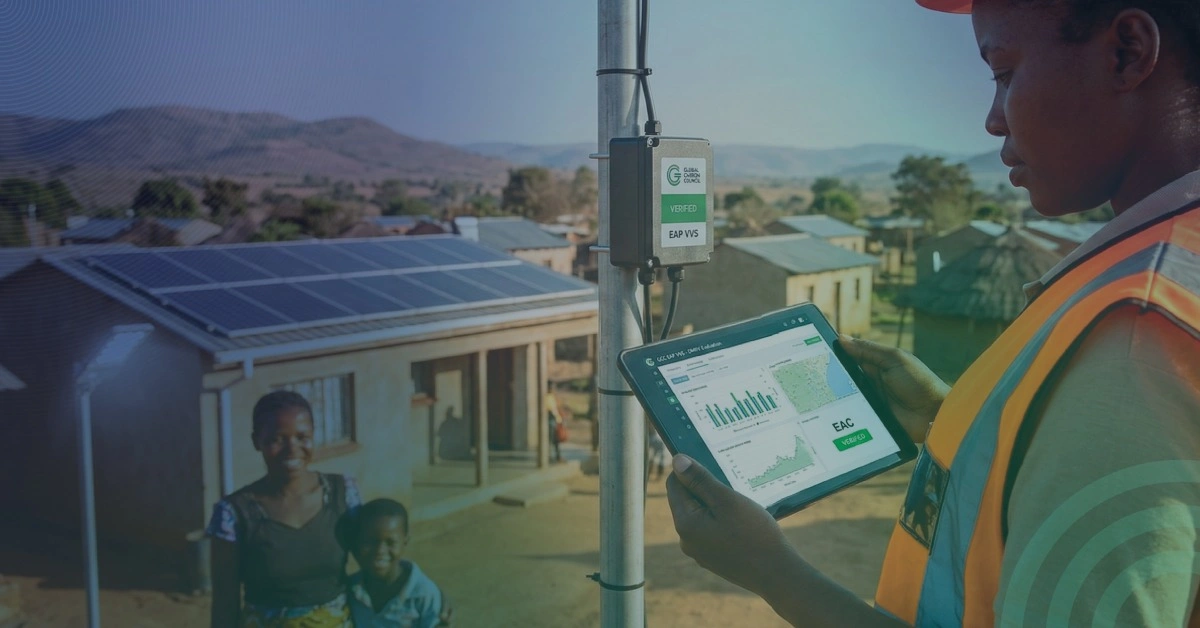
Global Carbon Council (GCC) has launched public consultation on its transformational Validation and Verification Standard (VVS) under the Energy Access Program (EAP), inviting stakeholders to provide feedback on a framework designed to strengthen real time issuance of credits using online tools and digital monitoring for energy access carbon projects.
The Energy Access Program supports the deployment of clean and affordable energy solutions in underserved communities by enabling household and small-scale energy interventions, such as clean cooking technologies, off-grid solar systems, mini-grids, and energy-efficient appliances – to generate high-integrity carbon credits known as Energy Access Credits (EACs).
Strengthening Monitoring, Reporting, and Verification through Digital Systems
The new Validation and Verification Standard introduces a structured and fully digital approach to Monitoring, Reporting, and Verification (DMRV). This ensures that project data is collected, reported, and independently audited using secure and tamper-proof digital systems, improving transparency and accuracy across all registered activities.
The standard sets out clear requirements for independent validation of Programs of Activities (PoA) and audit of GHG claims using online tools as well as non-GHG claims associated with emission reductions. It ensures that all activities demonstrate additionality, consistency with approved DMRV enabled methodologies, and compliance with host country regulations for authorized credits.
Through digital tools, the framework supports transparent near real time carbon credit issuance, reduces the risk of double counting, and strengthens governance across the entire project lifecycle.
Enabling Program-Based Energy Access Projects
Energy access interventions are implemented through numerous small-scale and geographically dispersed activities. The Validation and Verification Standard support a unique approach to Program of Activities (PoA) structure that allows multiple similar project activities to be registered under a single program while maintaining environmental integrity and methodological consistency.
This program-based approach coupled with DMRV tools and online audit process reduces transaction costs, improves operational efficiency for project developers, and enables community-level initiatives to participate in international carbon markets. It also provides a scalable pathway for expanding clean energy access while ensuring robust monitoring and independent verification.
Environmental and Social Safeguards
The standard places strong emphasis on maintaining environmental and social integrity throughout project implementation. Key elements include:
- Independent validation and verification by accredited bodies.
- Local and global stakeholder consultations.
- Audit of Environmental and social safeguards.
- Transparent reporting and documentation.
These requirements ensure that projects deliver measurable emission reductions while also generating positive social outcomes for communities.
Contribution to Sustainable Development
The EAP Validation and Verification Standard enable recognition of contribution to global sustainable development goals, particularly SDG 7 (Affordable and Clean Energy). It also supports co-benefits such as improved health outcomes, reduced energy poverty, and enhanced community livelihoods.
By strengthening trust in reported results through digital verification systems, the framework promotes long-term sustainability of energy access interventions and reinforces confidence among governments, investors, and market participants.
Call for Stakeholder Feedback
GCC encourages validation and verification bodies, auditors, governments, project developers, technology providers, financial institutions, and civil society organizations to review the draft Validation and Verification Standard and submit their comments as part of the public consultation process.
How to Participate in the Public Consultation
📅 Public consultation period:
🗓 Deadline to comment: 27th March
✉️ Submit comments to: operations@globalcarboncouncil.com
All submissions will be reviewed by GCC’s Regulatory and Technical Committees as part of the finalization process.