The Global Carbon Council (GCC) has considered its first Nature-based Solutions (NbS) project through the Project Consideration Form (PCF) process, marking an important milestone in the expansion of high-integrity nature-based projects under the Global Standard for Carbon Credits (GSCC). The GSCC represents GCC’s comprehensive framework governing project eligibility, methodological application, MRV requirements, environmental and social safeguards, and credit issuance, illustrating GCC’s continued progress toward establishing a globally trusted, integrity-focused carbon crediting system.
The PCF represents an early but essential step in GCC’s project lifecycle, where proposed projects are reviewed for eligibility and alignment with GCC’s program requirements before progressing to subsequent stages of development. Reaching this stage confirms that the project has entered GCC’s pipeline through a structured and transparent process.
Advancing Nature-based Solutions under GCC
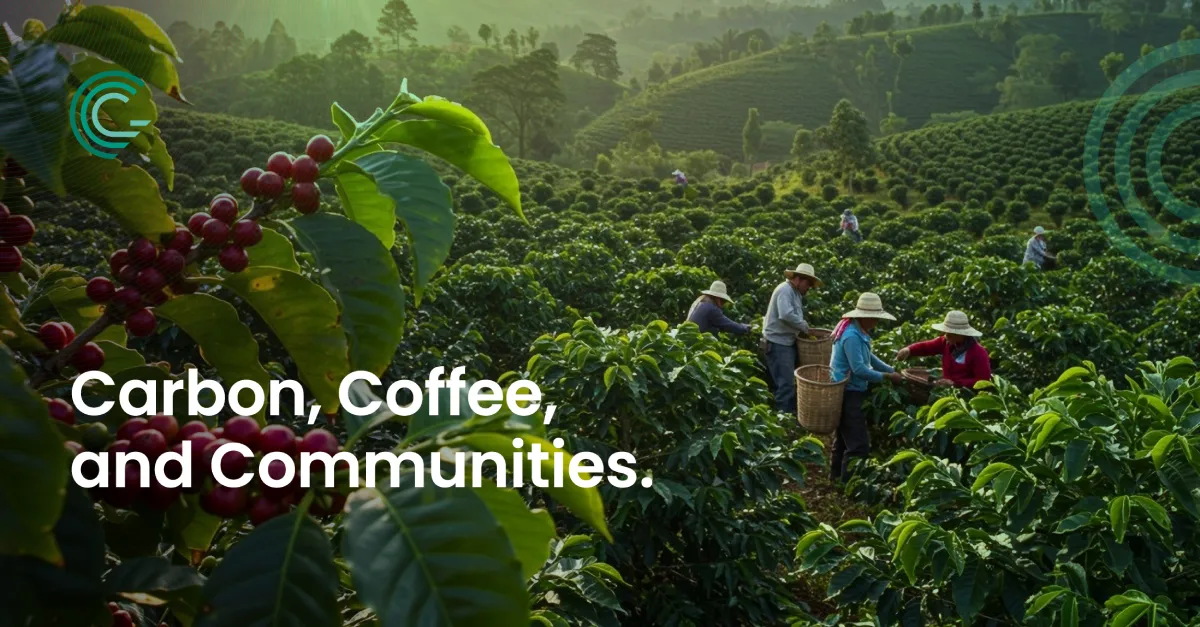
The project under consideration, Zhemgang Integrated Coffee Agroforestry Carbon Project in Bhutan, is based on an agroforestry approach that integrates shade-grown coffee with trees to enhance biomass growth and soil carbon sequestration. In addition to generating greenhouse gas removals, the project supports climate-smart agricultural practices and sustainable livelihoods for local farming communities.
By considering its first NbS project through the PCF process, GCC continues to broaden the range of project types supported under the GSCC, while upholding strong requirements for environmental integrity, methodological consistency, and robust safeguards.
Supporting High-Integrity Carbon Markets
NbS can play a critical role in climate mitigation by delivering measurable emissions removals alongside co-benefits such as improved soil health, enhanced biodiversity, and socio-economic resilience. This PCF milestone reflects GCC’s commitment to ensuring that NbS projects enter the carbon market through a clear, credible, and integrity-driven pathway.
Evaluating GCC’s first NbS project in Bhutan also reflects the GCC NbS program’s commitment to expanding climate finance opportunities in the Global South, particularly in countries with high ecological value and strong potential for sustainable, community-based land management. Beyond climate benefits, the agroforestry model supports multiple UN Sustainable Development Goals (SDGs), including poverty reduction, food security, biodiversity conservation, and resilient rural development.
As GCC continues to strengthen its frameworks for both nature-based and technological solutions, this milestone underscores ongoing progress in enabling high-quality climate action projects across diverse geographies and sectors.
Further updates will be made available on the GCC website as projects progress through the GCC program cycle.